Turn sustainability into your unfair commercial advantage.
Environmental sustainability consulting for advertising, media and technology companies: verified GHG inventories, SBTi targets and SB 253 readiness.










Your category is crowded. Your customers are asking harder questions.
Differentiation is more important than ever.
In a competitive category, most companies compete on features, price and speed. Those advantages get copied, and your customers struggle to tell you apart.
Buyers are requiring more from their suppliers.
More than 12,000 companies have set emissions targets with the Science Based Targets initiative, including most of the world's biggest advertisers and every major agency holding company. If you’re in their supply chain, your emissions are part of their Scope 3. That is why these companies ask for your GHG reports, targets and your position on environmental sustainability.
Questions like these appear in RFPs, RFIs and supplier reviews:
- Have you set science-based targets for reducing your carbon emissions?
- How did your Scope 1, 2 and 3 emissions change compared to last year?
- Do you publicly report the environmental performance of your technology operations, including AI?
- Do you assess the carbon emissions from developing, training and running the AI in your platform?
- How do sustainability considerations factor into your AI roadmap?
As AI and data centers drive up the carbon footprint of every digital business, more of those questions are coming. Companies with a verified answer get shortlisted. Companies that say "we don't know" run the risk of getting left off.
The advantage your competitors can't match
There are three types of differentiators to help a company stand out in a crowded category:
Unique
Something you do that no other company can do. Rare, and it doesn't last long.
Competitive
Something you do better, faster or cheaper than your competitors. Critical for success, but easy to copy.
Holistic
How you operate and what you stand for. Slower to build, much harder to replicate.
Sustainability is the ultimate holistic differentiator. It tells buyers how your company is run, which says more than another claim about speed, price or features.
Get your house in order, then put it to work.
Protect your business
Verified, audit-ready credentials
- Measure. A Scope 1, 2 and 3 GHG inventory covering your full tech infrastructure, including cloud and AI compute, independently verified and publicly disclosed
- Reduce. Science based targets validated by SBTi, and a practical plan to reduce emissions year over year
- Compensate. High quality, verified projects for what you can’t yet reduce, with the option to become CarbonNeutral® certified
- Product carbon footprint reports for AI and software products
- Reporting readiness for California SB 253 and SB 261, UK SECR, CDP, EcoVadis and the emissions requirements in CSRD, including climate risk reports where required
Grow your business
The differentiator your competitors can’t copy overnight
- Find the companies that prioritize sustainability
- Use your credentials to stand out in every RFP and pitch
- Tell your story through marketing, PR, awards and events
- Train your sales and BD teams to lead with sustainability
Regulators, customers, investors and employees want the same data. Be ready before they ask.
A verified GHG inventory is the foundation of every climate reporting framework. We build it once, to the right standards, and prepare you for whoever asks next, across North America, the UK and Europe.
Regulators
California SB 253 emissions reporting and SB 261 climate risk reports, UK SECR, and the emissions and target data required under CSRD and ISSB.
Customers
RFPs, RFIs and supplier reviews, CDP and EcoVadis, and the data requests that flow down from customers reporting under CSRD or working toward their own science based targets.
Investors and owners
ESG data requests from private equity and venture investors, lenders, and buyers running due diligence.
Employees
70% of Gen Z and millennial workers say a company’s environmental record matters when choosing where to work.
Source: Deloitte 2025
Regulations change and deadlines move. A verified GHG inventory prepares you for whatever comes next.
See the rules we prepare you for →Supplier Sustainability Questions
What buyers are asking about your sustainability work, including the growing set of cloud, compute and AI energy questions, and what a strong answer looks like.
"Alpine Project has been an important partner in helping Kargo advance and operationalize our sustainability strategy."
With their guidance, Kargo has completed three years of verified GHG inventories, set and published our science-based emissions reduction target, and become one of the first Certified CarbonNeutral® ad tech companies in the world.
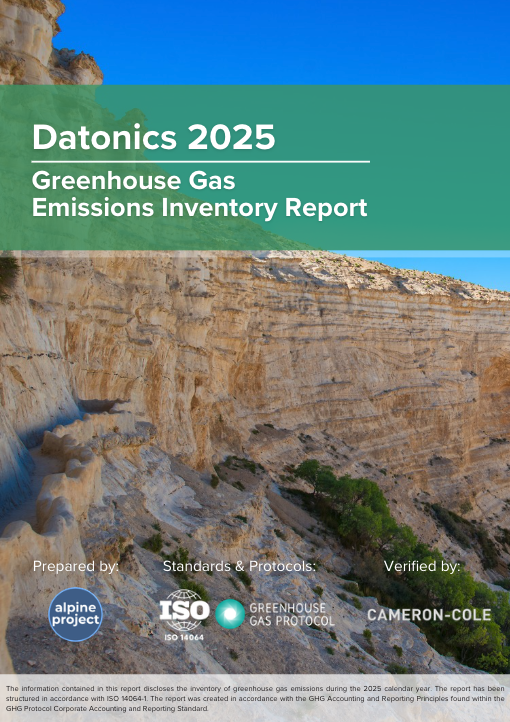
"Datonics is proud to be the first and only CarbonNeutral® certified audience data company in the world."
With Alpine's guidance, we have completed three years of independently verified GHG inventories and retired offsets across projects in Malawi, India, Mexico, Guatemala, Canada and the United States.
"Alpine Project has been an invaluable partner in bringing data-driven precision to Simpli.fi's sustainability strategy."
With Alpine's guidance, completing three years of inventories and achieving a 35.3% reduction in overall emissions since 2022 proves that operational efficiency and supply chain accountability go hand in hand.
"Alpine Project has been a valued strategic partner in advancing our sustainability journey."
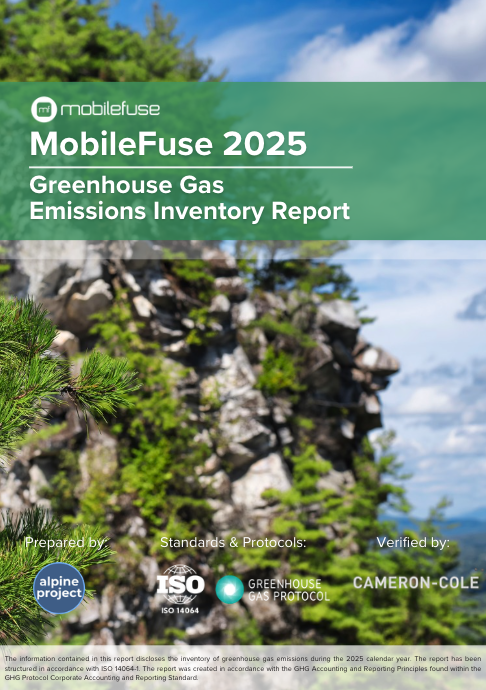
With their expertise, MobileFuse has successfully published 4 years of independently verified GHG inventory reports, is certified as a CarbonNeutral® company, and continues to make significant strides toward our long-term environmental goals.
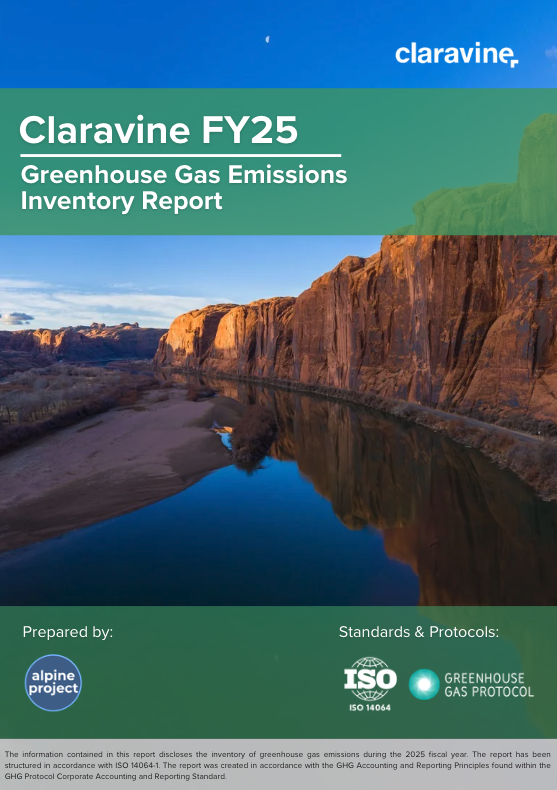
"Alpine Project has been instrumental in refining Claravine's sustainability strategy."
With their help, we reported our GHG inventory, set and published our target and organized an action plan to achieve our goals. This was an important milestone for our customers, our partners and our stakeholders.
Audit-ready reports, built to the right standards
Every inventory is built to the GHG Protocol and ISO 14064-1 and independently verified by an accredited third party. Through our alignment with The Climate Registry, your verified results can be publicly disclosed in a registry your customers trust. Each report is designed to be ready for clients, partners and investors.


Credentials that win and protect business
Claravine doubled its EcoVadis score and saved a contract with a major brand
Start with a free readiness assessment
In one short call, we map which regulations and customer requests apply to you, what data you already have, and the fastest path to verified, audit-ready results.
to verified, audit-ready results
from one project manager on your team. We do the rest.
than you think, with no software for your team to learn
Inspired by the mountains.
Built for business.
Alpine Project is a New York-based climate consultancy that helps ad tech, martech, media and advertising agency companies measure their emissions with a verified GHG inventory, set SBTi-validated targets, prepare for California SB 253, and turn their climate credentials into new business.
Alpine was founded by Brian Murphy after 25 years leading sales and revenue teams at Google, Yahoo, DoubleClick, AdMob and OpenX. We know how your customers make buying decisions, so we build sustainability programs that win business and hold up when procurement teams, legal teams and regulators take a close look.
As AI and data centers drive up the footprint of technology and digital media, more of these questions are coming. We help technology, media and marketing companies answer them with confidence.
We work like an alpine climbing team: small, experienced and fast, without the overhead of a large consulting firm or an expensive software subscription.
Meet the team →Partnerships and affiliations
The standards bodies, verifiers and partners behind our work.






What companies ask us before they start
Who does Alpine Project work with?
Alpine Project works with ad tech, martech, media and advertising agency companies, plus other technology businesses. Clients include IAS, Kargo, MobileFuse, Simpli.fi, Datonics and Claravine.
Why should my company care about its emissions?
Every company's operations and value chain have an impact on the environment. Even if you don't run factories, machinery or vehicles, your business produces greenhouse gas (GHG) emissions through the electricity, cloud services, travel and vendors it relies on. When a client, partner or investor asks for that data, having a verified answer ready protects your business.
Who is asking, or will ask, for my emissions data and science based target?
Many of the world's largest brands, and all of the global advertising holding companies, report their emissions every year and have set targets with the Science Based Targets initiative (SBTi). To reach those targets, they need their suppliers to share emissions data and set targets of their own. Regulation is adding pressure: California's SB 253 and SB 261 apply to large companies doing business in the state, and the EU and UK have their own reporting rules. Those requirements flow down to the companies they work with. Investors and owners, including private equity firms, are asking portfolio companies for the same data. And as attention on the environmental impact of AI and data centers grows, technology companies can expect more of these questions.
How do ad tech companies answer emissions questions from agencies and brands?
Start with a verified GHG inventory covering Scopes 1, 2 and 3, including cloud and AI compute, then a science based target. Those two items answer most supplier questionnaires, RFI questions and brand sustainability reviews.
How can this help our business?
First, it protects the business you have. You'll be ready for the RFIs, data requests and supplier engagement forms that ask for GHG data and targets. Second, it helps you win the business you want. If the brands you want as clients have set their own climate targets, showing that you are aligned with them sets you apart from your competition and opens new paths to partnerships and revenue. Finally, your emissions data shows where your business can run more efficiently and save money.
What is the process for a GHG inventory?
An Alpine consultant works with a project lead on your team to collect data, apply emissions factors and calculate your Scope 1, 2 and 3 emissions, following the GHG Protocol and ISO 14064-1. Your inventory is then verified by an accredited, independent third party. Finally, your report is publicly disclosed, either on your website or through a public registry such as The Climate Registry. From there, Alpine can help you set a science based target and build a plan to reach it.
How much work is this for our team, and how long does it take?
Most clients spend about 30 minutes a week for a few weeks gathering data and documents. Your Alpine consultant does the rest. Timing depends on the size of your company and the scope of the project, but most Alpine GHG inventories are complete within eight weeks, followed by about four weeks for independent verification.
How much does it cost?
Pricing depends on company size, the number of countries and entities, and the reporting scope. Most clients start with a free readiness assessment, a short call where we scope the work and provide a quote.
What makes Alpine different?
Alpine specializes in helping technology, media, advertising and marketing companies build and implement their sustainability strategies. We know the standards and protocols of corporate climate action, and we know your business, your clients and the questions they ask. Many carbon software tools stop at a self-reported estimate. Independent verification and public disclosure are included in every Alpine engagement, so your results hold up when a client, regulator or investor checks. Every client also gets the Alpine Insights dashboard to track progress.
Which regulations apply to my company?
It depends on your revenue, where you do business and where your customers are. California's SB 253 covers companies with more than $1 billion in annual revenue doing business in the state, and SB 261 covers those with more than $500 million. Companies with operations in the EU or UK have their own rules, and companies that sell to those businesses are asked for the same data. Our free readiness assessment maps which rules and customer requests apply to you, and when.
How is Alpine Project different from carbon accounting software?
Carbon accounting platforms give your team software to run. Alpine Project is consultant-led: we build the inventory for you and include third-party verification, public disclosure through The Climate Registry and SBTi submission. A software subscription still needs an owner to collect the data, check it and report it. With Alpine, you get the data, a verified report and the Alpine Insights dashboard to track progress, without asking your finance team to learn new software.
What if the regulations change or get delayed?
Deadlines in California and Europe have already moved more than once, and they may move again. Every framework starts with the same thing: an accurate, independently verified GHG inventory. Build that now and you are ready whichever way the rules go, and ready for the customers and investors who will ask either way.
Are you ready?
Clients, partners, investors and employees are asking for verified emissions data, and more of those questions are coming as AI and data centers drive up the footprint of technology and digital media. Let's make sure you have the answer.